
City Car, 4×4 or Minivan? How to Choose the Right Rental for Morocco
How to pick between a city car, crossover and 4x4 for Morocco — covers cities, Atlas passes, Sahara pistes, fuel planning and a quick-decision guide.
Morocco's geography is one of the most varied in the world. In a single road trip you can drive from Atlantic coastline to Saharan dunes, passing through cedar forest, high mountain switchbacks, and ancient river valleys along the way. The car you book will define what your itinerary actually looks like — get it right and every road opens up; get it wrong and a section of piste becomes an expensive recovery bill.
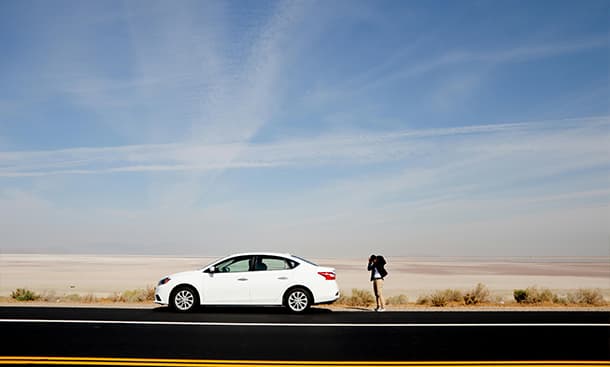
For city and coastal travel, a compact car is the smart choice. If your trip stays in the imperial cities — Marrakech, Fes, Casablanca, Rabat — or follows the Atlantic coast between Agadir and Essaouira, a small car like a Dacia Logan, Renault Clio, or Hyundai i10 is ideal. Medina streets are narrow, parking is scarce, and the motorways between cities are well-paved. Note that manual transmission is far more common at Moroccan agencies and costs 15–40% less than automatic; unless you specifically need an automatic, the manual will save you money and is usually more readily available.
If your route includes mountain passes, upgrade to a crossover. The Tizi n'Tichka pass (2,260 m) between Marrakech and Ouarzazate, the Tizi n'Test pass (2,092 m) to Taroudant, and the roads through the Dades and Todra Gorges are all sealed tarmac and manageable in a standard car — but the moment you turn onto an unpaved track, ground clearance matters. A Dacia Duster, Renault Arkana, or similar crossover gives you the clearance to handle rough stretches without the premium cost of a full 4x4. Reserve the true 4x4 for deep piste work: Merzouga, M'Hamid, or any route that genuinely takes you off sealed road in the deep south.
Families and groups travelling together should look at 7-seat MPVs. A Citroën Berlingo, Dacia Lodgy, or Renault Kangoo Maxi seats seven with luggage and keeps the whole group comfortable on the long motorway stretches between major cities. Before signing the rental agreement, confirm that a full spare wheel is included — on piste routes, a flat tyre with no spare in a remote valley is a very bad situation. Roadside assistance from most Moroccan agencies can take three to five hours in remote areas.
Fuel planning is often overlooked until it isn't. Morocco has a dense national road network and a growing motorway system, so diesel is a practical choice for intercity distances: Casablanca to Agadir is around 450 km, Casablanca to Marrakech around 240 km, and Marrakech to Merzouga around 560 km. Petrol stations (petrol 95/98 and diesel) are plentiful on main roads but become sparse once you travel south of Ouarzazate or east toward the Ziz Valley. The rule is simple: never pass a filling station when your gauge is under half in rural or southern Morocco.
Quick decision guide: staying in cities or on the coast — book a compact city car and save on fuel and rental cost. Visiting the Atlas passes, Ouarzazate, or the Draa Valley — choose a crossover or estate with decent ground clearance. Deep piste routes, Merzouga, or Saharan tracks — book a 4x4 and confirm a full spare wheel is included. Travelling as a family of four or more — a 7-seat MPV is worth the modest extra cost for the comfort on long drives. Doing a full Morocco circuit covering multiple terrain types — a crossover is the best all-rounder; plan your route to stay on sealed roads except where a piste detour is the point of the trip.